Blog Lake District
← Back to Blog
Turner came to the Lake District seven times. Constable came. John Sell Cotman came. The topographical watercolourists of the late 18th century came in such numbers that the Lake District became arguably the most painted landscape in England. They were not only coming for the mountains and the lakes, though the mountains and lakes were part of it. They were coming for the light.
The Lake District light is different from the light of southern England, and different in ways that matter to how the landscape looks. Understanding why gives you a richer experience of what you are seeing.
The Lake District sits at latitude 54° north — further north than the southern edge of Russia, further north than the northern edge of Newfoundland. At this latitude, the sun is never high in the sky. Even at midsummer noon, the sun in the Lake District is lower than it would be at the same time in Cornwall or Kent. In autumn and winter, it barely clears the southern ridgeline.
Low sun means long shadows. Long shadows mean that the landscape is modelled — that the fells have texture and depth rather than being flattened by overhead light. The particular quality of Lake District light in autumn, when the sun is low and golden and the shadows of the ridgelines fall long across the valley floors, is the quality that Turner was trying to capture. It is a light that exists at this latitude, in this combination of weather and geography, and almost nowhere else in England.
The Lake District receives more rainfall than almost anywhere else in England — Seathwaite in Borrowdale averages over three metres per year. This rainfall produces cloud, mist, low light and dramatic atmospheric effects that dry, sunny landscapes cannot produce.
The cloud conditions that most visitors regard as disappointing are, from a painter's or photographer's point of view, often the most interesting. A ridge half-hidden in cloud with the valleys below in sun; a lake with mist at one end and clear water at the other; a shower moving across the fell from west to east, trailing a grey curtain of rain with the sun behind it. These are not inferior versions of a fine day. They are specific atmospheric events with their own visual character.
Wordsworth wrote about this directly. The weather is not an obstacle to experiencing the Lake District; it is part of the experience.
The best light in the Lake District is at the edges of the day. Dawn and dusk in the Lake District — particularly in autumn and winter when the sun rises and sets within reasonable hours and the low angle produces the most extreme colour and shadow — are when the landscape is at its most photographically exceptional.
The view from Surprise View above Derwentwater at the moment the sun clears the eastern ridge and the first light catches the lake three hundred metres below is worth getting up early for. The evening light on Ullswater, with the western fells turning copper and the water going dark, is one of the finest light effects available in England at any time of year.
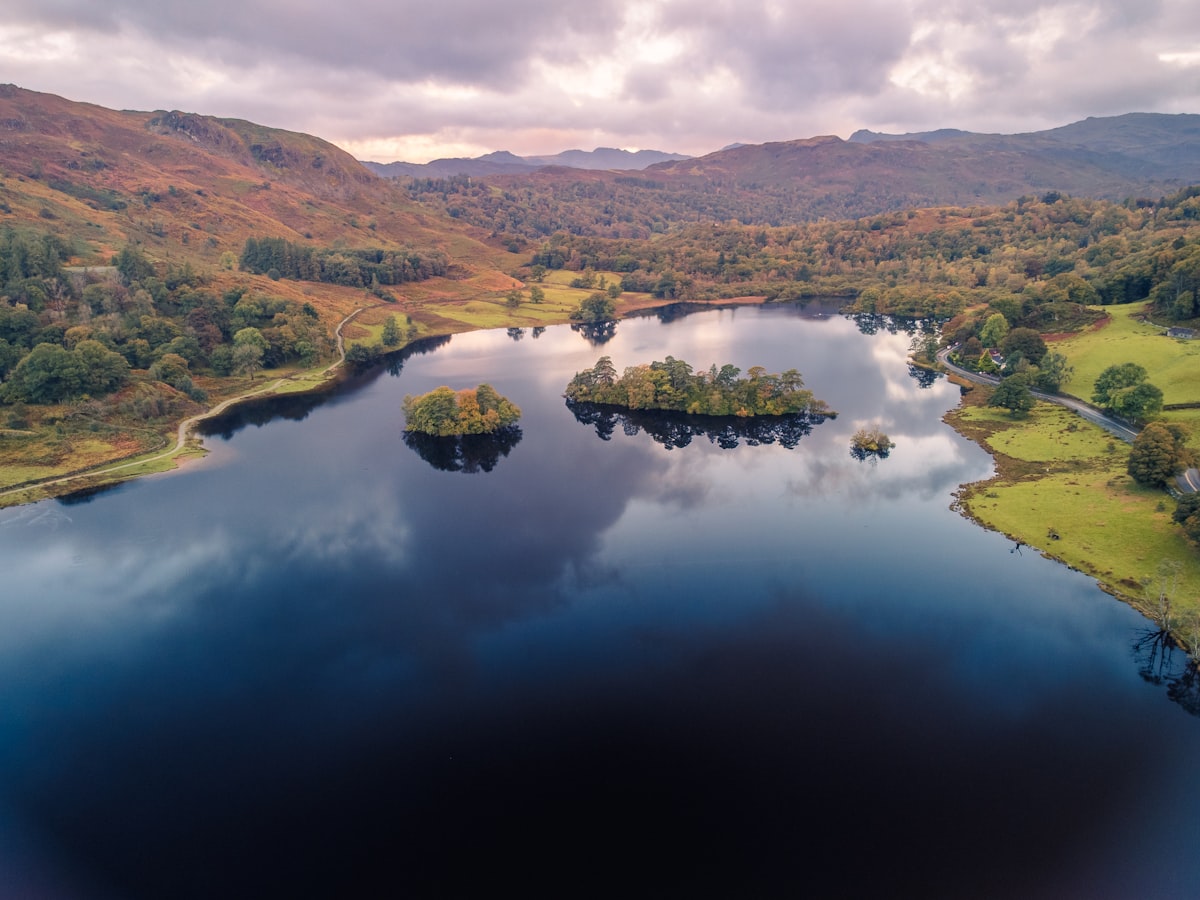
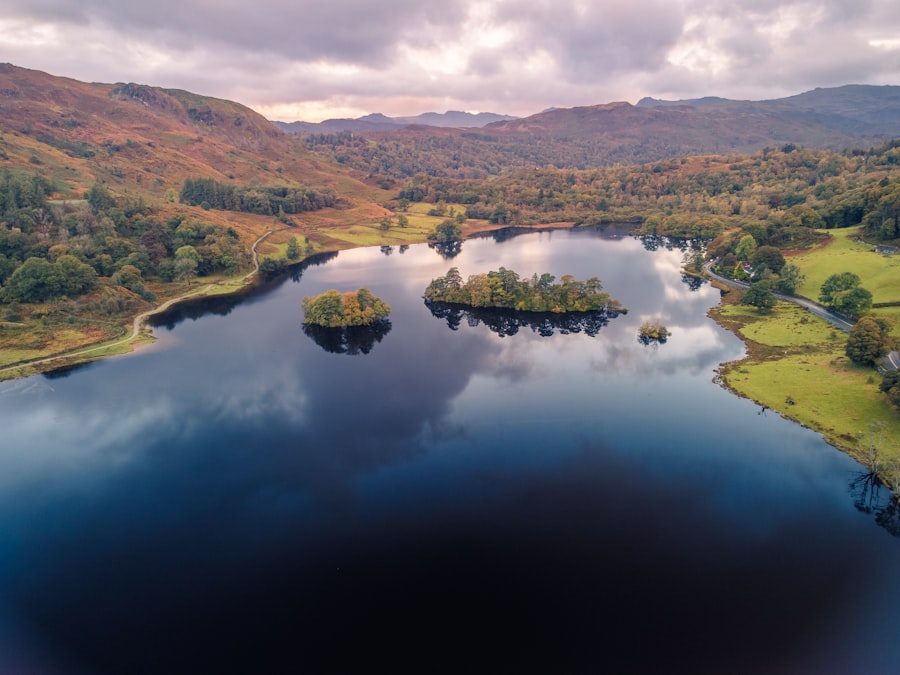
Still water is a secondary sky. The Lake District, with its multiple lakes and tarns at different elevations, offers reflection conditions that very few landscapes can match. Derwentwater on a windless October morning — the dark volcanic fells, the wooded islands, the autumn colour on the shore, all of it reflected perfectly in the still surface — is one of those sights that produces silence in people who see it for the first time.
The conditions for perfect reflection — no wind, no rain, the right light — are not predictable. They cannot be scheduled. But they occur regularly enough in the Lake District, particularly in October and early November, that visitors who stay for a week are likely to encounter them.
Your expert storyteller will explain the light and the weather as you travel through the landscape — what you are looking at, why it looks the way it does, and what the painters who came here were trying to understand and capture. The Lake District is not simply a beautiful place. It is a place where beauty has a specific character that is worth understanding.
Our tours run in all weathers and all seasons. See all tours and book here.