William Wordsworth walked an estimated 180,000 miles in his lifetime. The figure was calculated by Thomas De Quincey, who knew Wordsworth well, based on his observations of Wordsworth's daily practice and a rough extrapolation across the poet's long life. Whether the arithmetic is precise or not, the order of magnitude is right. Wordsworth walked every day, in all weathers, from early adulthood until his mid-seventies, and he walked most productively on the fells and lanes around Grasmere and Rydal that he had known since childhood.
He also, famously, composed aloud while walking. Not muttering — speaking the lines at full voice, stopping to adjust a phrase, pacing out the metre with his feet, sometimes stamping a troublesome line into the ground until the rhythm came right. His sister Dorothy recorded in her journal the sound of him overhead on the path above Dove Cottage, declaiming the Prelude to the fells and the sky.
Wordsworth's practice of composing while walking was not idiosyncratic — it was a deliberate working method that he had developed from his earliest serious writing and that he maintained for sixty years. His explanation, given to various correspondents and recorded in several memoirs, was consistent: walking freed the mind from the desk's demand for immediate production and allowed the poem to arrive at its own pace.
The specific connection between the rhythm of walking and the rhythm of verse was not, for Wordsworth, metaphorical. The iambic pentameter of much of his finest work has the cadence of a moderately brisk walking pace. The Prelude, composed almost entirely on the fells and lanes around Grasmere and Rydal between 1799 and 1805, has a forward momentum that several critics have described as specifically ambulatory — the poem moves the way a walk moves, with digressions and returns and the sense of a particular landscape passing underfoot.
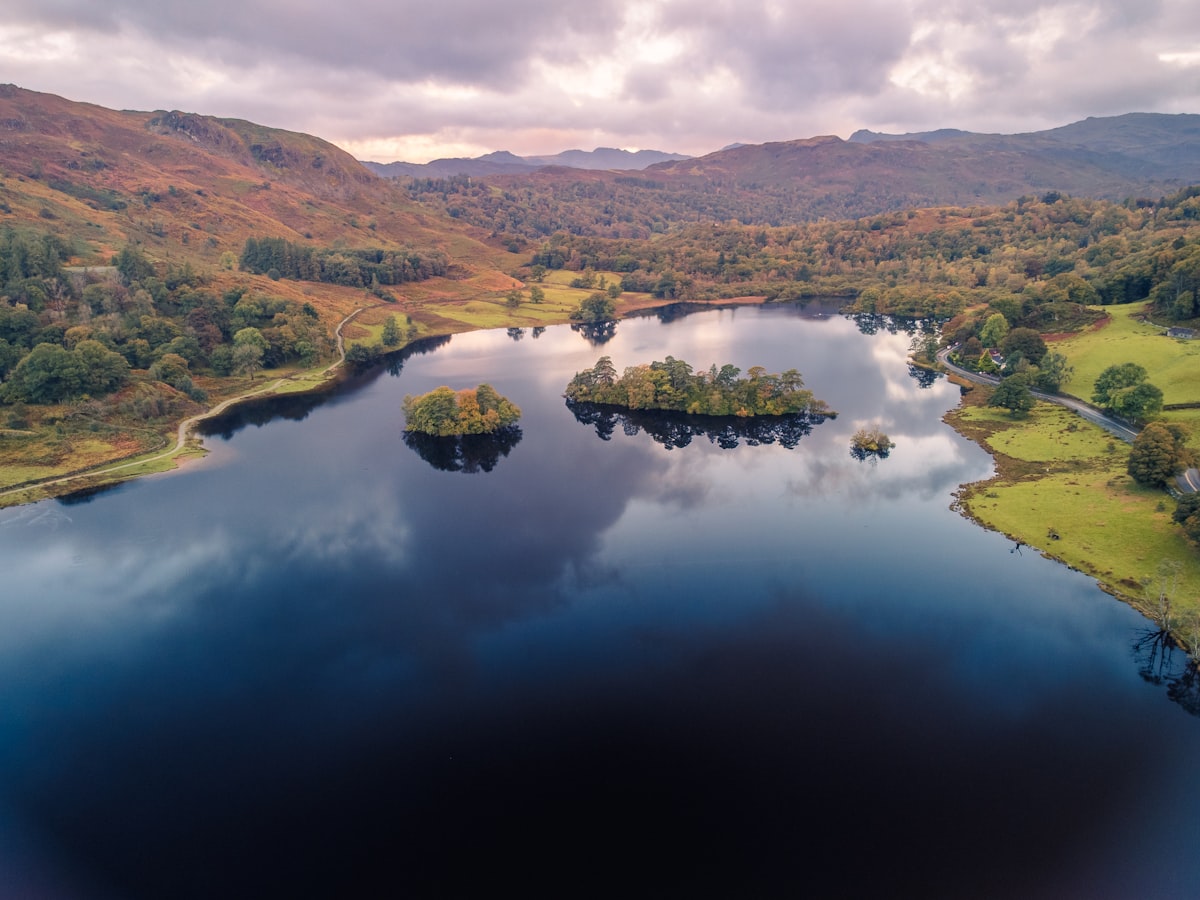
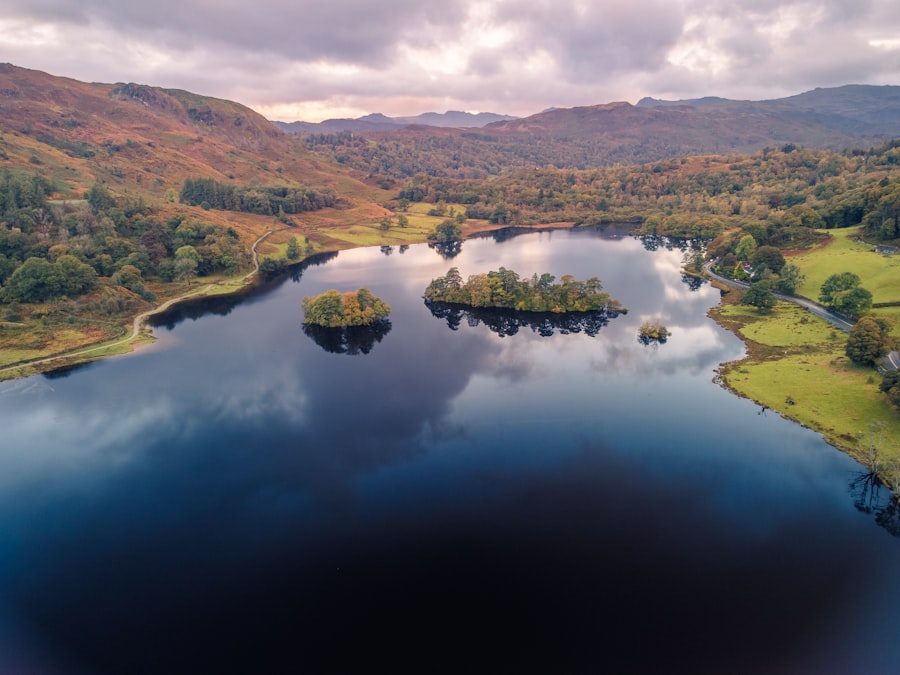
The lane from Dove Cottage in Grasmere to Rydal Mount, along the eastern shore of Rydal Water, is the most walked stretch of ground in Wordsworth's biography. He walked it thousands of times, in both directions, at all hours. He knew every stone of it. De Quincey, who rented Dove Cottage after Wordsworth moved to Rydal Mount, reported that the path from the cottage gate was worn in a distinct groove by Wordsworth's feet — a claim that is almost certainly exaggerated but points at something real about the frequency and intensity of the use.
The lane is still there. It takes twenty minutes to walk, passes above Rydal Water with the lake visible below through the oak trees, and reaches Rydal Mount at the top of the village. It is the same lane, with the same views, that Wordsworth walked in 1800 and 1815 and 1830. The surface has been improved but the route, the views and the scale of the surrounding landscape are unchanged.
Wordsworth's poetry is full of specific places — not generic landscapes but named locations, particular views, the detail of a specific evening on a specific lake. This specificity was deliberate and central to his aesthetic. He believed that general descriptions of nature produced general emotional responses, and that only the particular — this tarn, this fell, this evening light — could produce the kind of sustained attention that leads to genuine understanding.
When he composed on the fells above Grasmere, he was looking at the landscape he was writing about. The Prelude's account of skating on Esthwaite Water, of rowing out onto the lake at night and being followed by the dark peak that rose above the horizon — these were not childhood memories recovered from a distance. They were memories of a landscape he was standing in, that he could walk to in an afternoon, that he could see from his bedroom window.
The specificity is what makes the poems remarkable. And the specificity came, in large part, from walking.
The Wordsworth Morning Tour covers Dove Cottage, the compositional landscape around Grasmere, and the lane above Rydal Water where much of the Prelude was composed on foot. Your expert storyteller will walk sections of the route with you — not simply describing what Wordsworth saw but standing in the places he stood, looking at what he was looking at when the poems came.
The Wordsworth Afternoon Tour covers Rydal Mount (visited at the gates while the house is temporarily closed for conservation work), the later compositional landscape and the paths where he continued walking and composing into his seventies. The difference between the lane above Rydal Water and the formal garden at Rydal Mount — the young poet striding through rain composing aloud, and the old poet pacing his garden paths in late afternoon sun — is the difference between two periods of the same life, in the same landscape, connected by the same practice of walking and thinking.
The Wordsworth Morning Tour and Wordsworth Afternoon Tour both cover the walking landscapes that produced the poetry.