
Guide Brontë
← Back to Guides

Somewhere on Haworth's Main Street right now, someone is looking for a doorway they recognise from the trailer. They're not going to find it. No Wuthering Heights film has ever actually been shot in Haworth — including the most recent one. Productions go where the logistics work, which usually isn't a real, lived-in Yorkshire village. What Haworth has instead is better than a film set: it's the source.
Film adaptations of Wuthering Heights turn up roughly once a decade, like clockwork, and every single one has been shot somewhere other than the real village — not out of disrespect, out of logistics. A production doesn't need the actual Brontë parsonage. It needs a wide sky, a farmhouse with no satellite dish bolted to the chimney, and roads broad enough for the equipment trucks. The most recent version, Emerald Fennell's 2026 adaptation with Margot Robbie and Jacob Elordi, found all of that around Swaledale instead — Reeth, Low Row, the moor above Surrender Bridge — a good hour's drive north of Haworth, chosen for how it looks on camera rather than for any connection to the Brontë family.
It's worth being precise here, because one production really did come close. To Walk Invisible, the BBC's 2016 drama about the sisters' own lives rather than their fiction, built a full-scale replica of the parsonage on Penistone Hill — near enough to the real one to be seen from the Top Withens path. Even that wasn't quite the genuine article: the production wanted the 1840s to look properly bare, and the real parsonage has picked up rather a lot of trees since Emily's day. Close, but not quite the house itself — which, if you're keeping score, is as near as any Brontë-related screen production has ever got.
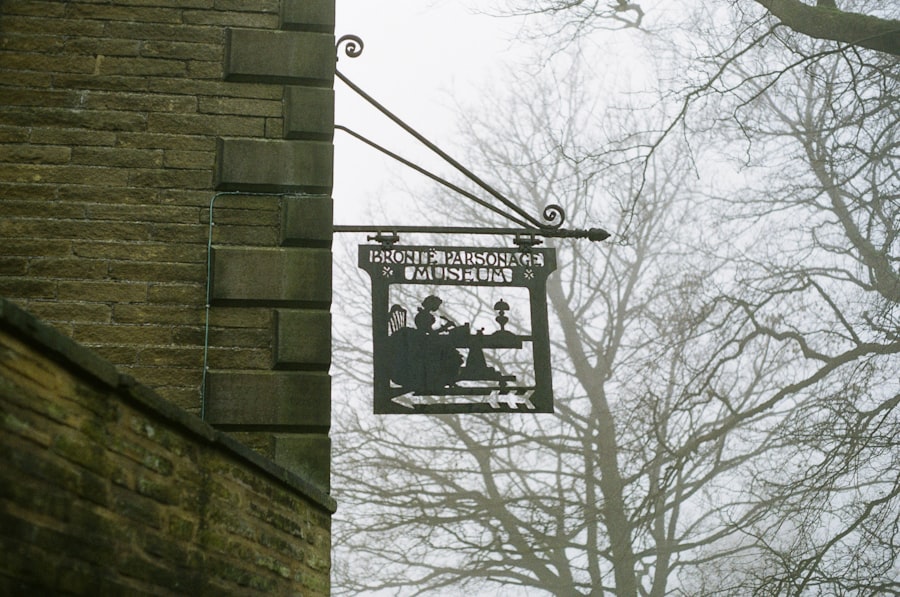
What Haworth has instead of a film set is, if you ask us, the better thing: the source itself. Emily Brontë wrote Wuthering Heights in the parsonage that's now a museum, with more or less the same moor she was writing about visible from the window. A film location is where the cameras stood for six weeks before the crew moved on. This is where the story actually lived.
That's not the smaller claim. Sets get struck the moment the next production needs the trucks elsewhere. The parsonage, the church, and the moor above the village have had considerably longer than six weeks to prove they're not going anywhere.
Planning a Brontë Country day? These go well together:
Has any Wuthering Heights film been shot in Haworth?
No major adaptation to date, including the most recent 2026 version, has used Haworth itself as a filming location — productions are typically shot wherever suits the budget and schedule.
Where was the most recent Wuthering Heights film shot?
Emerald Fennell's 2026 adaptation was filmed primarily around Swaledale in the Yorkshire Dales, a different part of Yorkshire from Haworth.
So why do people associate Haworth with the film industry at all?
Because Haworth is where Emily Brontë wrote the original novel, even though it's never been used as a shooting location for any adaptation.
What can I actually see in Haworth related to the book?
The Brontë Parsonage Museum, the church where the family is buried, and the moorland landscape that shaped Emily's writing.
Was To Walk Invisible filmed in Haworth?
Partly. The 2016 BBC drama about the Brontë family, not a Wuthering Heights adaptation, built a full-scale Parsonage replica nearby on Penistone Hill rather than filming at the real building — chosen partly because the actual Parsonage is now surrounded by trees that weren't there in the 1840s.
Does the Brontë Parsonage Museum cover the film adaptations?
Exhibitions there have covered the history of Wuthering Heights adaptations, from the earliest film versions through to the most recent — check current exhibitions before you visit.
Do LDT tours visit any film locations?
No — our Brontë Country Day Trip focuses on the literary sites connected to the sisters themselves, not any film production, past or future.