- Found nowhere else on Earth
- The vendace — and it lives in one lake
- Britain's rarest wild flower story
- Lady's-slipper orchid, once down to a single plant
- Ice Age survivors
- Arctic-alpine plants on Helvellyn's high crags
- Rarer than tropical rainforest
- Borrowdale's Atlantic oakwoods
- Two sites in all England
- Scotch argus butterfly — one of them is Smardale
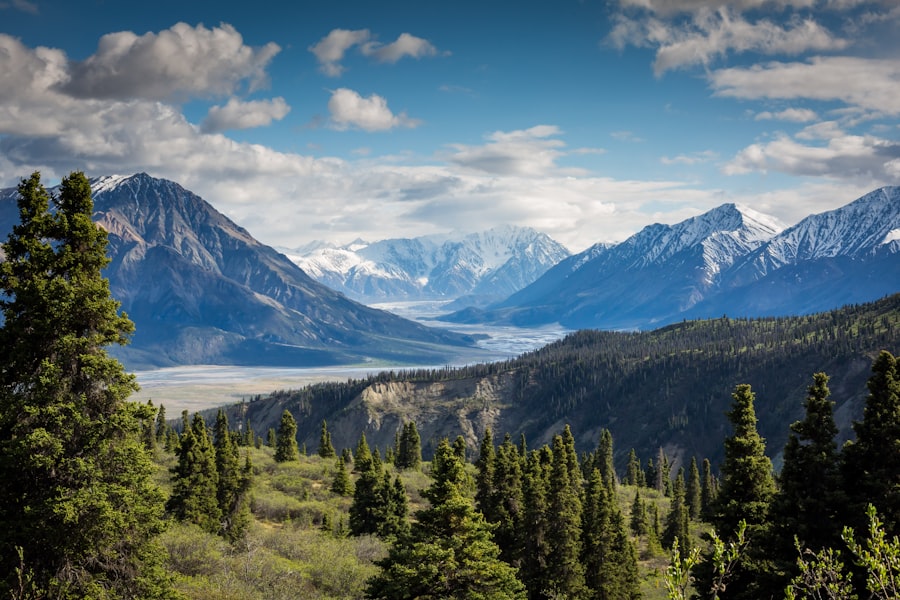
The short version: people come to the Lake District for the view, and the view is the least unusual thing about it. Within these two National Parks are a fish that exists in one lake and nowhere else in the world, a woodland habitat rarer globally than tropical rainforest, plants stranded here by the retreating Ice Age, and a butterfly whose entire English population lives at two addresses. This is a guide to the things that make this landscape genuinely unrepeatable.
The vendace — a fish from the Ice Age
Britain's rarest freshwater fish lives in Bassenthwaite Lake and Derwentwater. The vendace is a relic: when the glaciers retreated at the end of the last Ice Age, this Arctic whitefish was left behind in a handful of deep, cold northern lakes and has been there, isolated, ever since. It exists in Britain in the Lake District and nowhere else at all.
It has been in serious trouble — warming water, nutrient enrichment, and competition from introduced species have all pressed on it, and conservationists have gone as far as establishing refuge populations in other lakes as insurance against losing it entirely. You will not see one. It lives in deep, cold water and is the size of a herring. But it is beneath the surface of a lake you can stand beside, and knowing it is there changes how the water looks.
Its cousin, the schelly, is scarcely less remarkable — another Ice Age whitefish, found in just four Lake District waters (Ullswater, Haweswater, Red Tarn and Brothers Water) and nowhere else on Earth.
The Atlantic oakwoods — Britain's rainforest
The mossy, dripping, boulder-strewn oakwoods of Borrowdale are temperate rainforest — a habitat defined not by heat but by constant humidity. Every surface is covered: mosses, liverworts, ferns and lichens grow on the rocks, on the ground, and on the trees themselves, some of them species found nowhere else in England.
Temperate rainforest is globally rarer than tropical rainforest. Britain's western fringe holds a meaningful share of what remains, and Borrowdale is among the finest surviving examples. Most visitors drive through it thinking it is simply a nice wood.
The Ice Age plants on the high crags
On the north- and east-facing crags of Helvellyn, Great Gable and the high fells grow plants that belong in the Arctic and the Alps: purple saxifrage, alpine lady's-mantle, roseroot, mountain sorrel, alpine cinquefoil, and the exquisite alpine forget-me-not. These are relics of the tundra that covered Britain twelve thousand years ago. As the climate warmed, they retreated upwards, and on the coldest, highest, most inaccessible ledges they simply stopped and stayed.
They survive because sheep cannot reach them. That is the whole explanation. The single greatest force shaping the ecology of the Lake District fells is the sheep, and where the sheep cannot go, the Ice Age is still, faintly, going on.
Purple saxifrage is the one to know: it flowers absurdly early, sometimes in March, a small vivid magenta star on bare wet rock while the fells around it are still brown.
The lady's-slipper orchid
The most dramatic story in British botany. The lady's-slipper orchid — large, extraordinary, with a swollen yellow pouch and twisted maroon petals — was collected almost to death by Victorian plant hunters and gardeners. By the twentieth century it was believed extinct in Britain. Then a single wild plant was found surviving in the Yorkshire Dales, and it was kept under armed, round-the-clock guard for decades — the rarest plant in Britain, watched by volunteers.
Painstaking propagation and reintroduction work has now returned it to a small number of protected sites. It remains one of the rarest plants in the country and its locations are, for obvious reasons, not widely advertised.
The limestone pavement
The limestone pavements above Malham and Ingleborough are one of Britain's rarest and most extraordinary habitats — a bare, cracked, moonscape surface of clints (blocks) and grikes (fissures), scoured clean by glaciers and dissolved into shape by rainwater over ten thousand years.
What grows in the grikes is the strange part: woodland plants, in a landscape with no woodland. Hart's-tongue fern, dog's mercury, herb-Robert and rare limestone ferns shelter in the cool, damp, shaded cracks, a relic community of the forest that once stood here. The habitat is so scarce, and was so heavily damaged by removal for garden rockeries, that it is now legally protected.
The animals
Red squirrel — Cumbria is one of England's last strongholds, and the Dales hold their own population at Snaizeholme. See red squirrels in the Lake District and Snaizeholme.
Osprey — recolonised England naturally, and both Bassenthwaite and Foulshaw Moss hold breeding birds.
Herdwick sheep — not rare in numbers but genuinely unique: a breed found essentially nowhere outside the Lake District fells, hefted to their own patch of mountain and passing that knowledge from ewe to lamb. Read more on the Herdwick.
High brown fritillary and Scotch argus — see our guide to the insects of the Lakes and Dales. Britain's most endangered butterfly, and a species with two English sites, both within an hour of Kendal.
Frequently asked questions
What is the rarest thing in the Lake District?
The vendace has the strongest claim — a fish that exists in Bassenthwaite and Derwentwater and nowhere else in Britain, an Ice Age relic left behind when the glaciers retreated. Alongside it, the Atlantic oakwoods of Borrowdale are a habitat rarer globally than tropical rainforest.
Is the Lake District really a temperate rainforest?
Parts of it, genuinely so. Temperate rainforest is defined by constant humidity rather than heat, allowing mosses, lichens and ferns to grow on every surface including the trees. Britain's western oakwoods qualify, and Borrowdale is among the best remaining examples in England.
Can I see the lady's-slipper orchid?
Not casually. It remains one of Britain's rarest plants, its sites are protected, and its locations are not publicised for good reason — Victorian collecting is what nearly destroyed it in the first place. Some reintroduction sites have supervised public viewing in season; check with the relevant conservation bodies.
Why do so many rare things survive here specifically?
Mostly because of difficulty. Steep crags that sheep cannot climb, bogs too wet to drain, gorges too awkward to clear, lakes too deep and cold to warm up. This landscape's rarities largely survive in the places human beings and their livestock found least convenient — which is a slightly humbling thing to realise while admiring the view.
What is the vendace?
Britain's rarest freshwater fish, an Arctic whitefish left behind in a few deep, cold northern lakes at the end of the last Ice Age. In Britain it survives only in the Lake District. Its cousin the schelly is found in just four Lake District waters and nowhere else on Earth.
Why do so many rare species survive in the Lakes and Dales?
Largely because of difficulty. Steep crags sheep cannot climb, bogs too wet to drain, gorges too awkward to clear, and lakes too deep and cold to warm. The rarities survive in the places humans and their livestock found least convenient.
Can I see the lady's-slipper orchid in the Yorkshire Dales?
Not casually. It remains one of Britain's rarest plants. It was collected almost to extinction by Victorian plant hunters, reduced to a single guarded wild plant, and has been slowly reintroduced to a small number of protected sites whose locations are not publicised.
Sources & further reading
- Cumbria Wildlife Trust
- Plantlife
- Woodland Trust — temperate rainforest
- Natural England
- The English Lake District — UNESCO World Heritage List
More on the natural landscape: