- The signature tree
- Sessile oak — the native oak of the western hills
- The one everyone photographs
- Scots pine, dark against the water
- The Dales specialist
- Ash, still dominant — and still under threat
- The rarity worth knowing
- Juniper on the fellsides; wych elm in the limestone gills
- Best month to learn them
- May, when every leaf is fresh and distinguishable
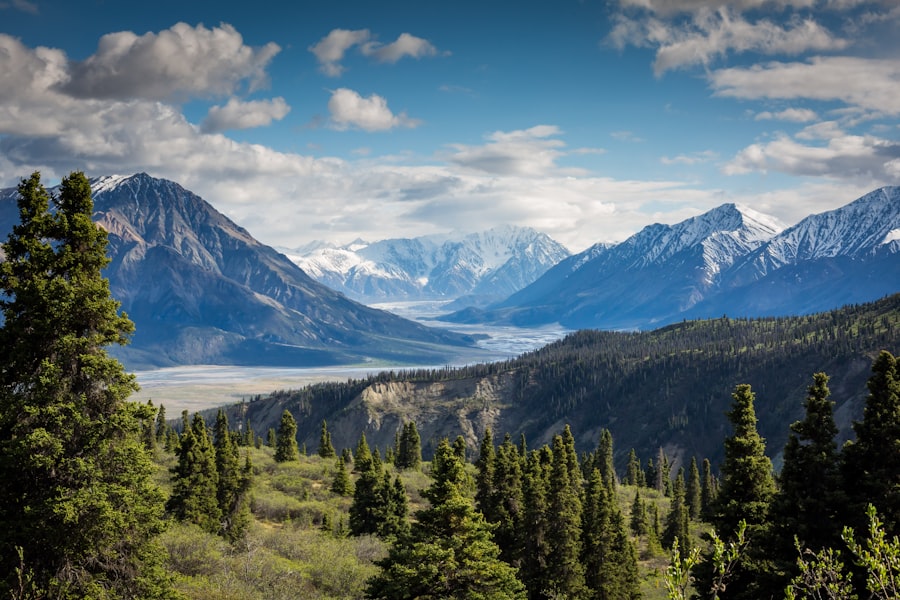
The short version: the Lake District's native woodland is dominated by sessile oak, birch, hazel, rowan, alder and ash. The Yorkshire Dales tilts the same list towards ash and hazel on its limestone. The conifers you see on the fellsides — the dense, dark blocks — are mostly twentieth-century plantations of Sitka spruce and larch, not natural woodland. Once you can tell those two categories apart, you are reading the landscape rather than just looking at it.
The six trees to learn first
Sessile oak — the defining native tree of the Lakes. Where the western oakwoods survive — Borrowdale is the great example — they cling to steep, boulder-strewn slopes that were too awkward to clear. Look for the lobed oak leaf on a long stalk, with the acorns sitting almost directly on the twig (that is the "sessile" part — the English oak is the other way round). These woods are Atlantic rainforest in all but name: everything is furred with moss, lichen and fern.
Silver birch and downy birch — the pioneer. Slim, pale-barked, quick to colonise anything left alone. Birch is what a fellside does first when the sheep stop grazing it, which is why you now see so much of it in rewilded valleys.
Rowan — the mountain ash, though it is no relation to ash. Feathery, divided leaves; blazing red berries in late summer. It grows improbably high on crags and out of rock clefts — if you see a lone small tree perched somewhere no tree has any business being, it is almost always rowan. Traditionally planted by farmhouse doors to keep witches off.
Hazel — multi-stemmed, rarely a single trunk, with round leaves and a rough, hairy feel. Hazel dominates the limestone woodland of the southern Lakes and the Dales, and it was coppiced for centuries — cut to the base on rotation for hurdles, charcoal and bobbins. Many "wild" hazel woods are old industrial sites in disguise.
Alder — the water tree. If a line of trees is tracing a beck across a valley floor, it is alder. Rounded, blunt-tipped leaves and small woody cones that persist all winter. Alder timber does not rot underwater, which is why it went into the foundations of everything from bridges to Venice.
Ash — the great tree of the Dales limestone. Black buds in winter (nothing else in Britain has them), pinnate leaves late to appear and early to fall. Ash is also the tree we are losing: ash dieback is now widespread across both National Parks, and you will see dead and thinning crowns in every dale.
The conifers — and why they are there
The dark blocks of conifer on the fellsides are almost entirely a twentieth-century creation. After the First World War, Britain found itself dangerously short of timber, and the Forestry Commission was founded to fix it. Sitka spruce — a North American tree that tolerates wind, rain and poor soil better than anything native — became the workhorse, along with larch (the one conifer that drops its needles, turning gold in autumn and bare in winter) and Scots pine.
Scots pine deserves separating from the rest. It is genuinely native to Britain, and the mature specimens standing individually along lake shores — the ones with the rust-orange upper trunk and the flat, spreading crown — are among the most photographed trees in the Lakes. The pine on a promontory at Derwentwater or Ullswater is a picture composition that has been sold on a thousand postcards.
The rarities worth knowing
Juniper — a low, prickly, dark evergreen shrub on the open fellside, and one of only three conifers actually native to Britain. The Lake District holds nationally important juniper populations, and they are in trouble: grazing pressure, disease and an ageing population mean few seedlings survive. If you see juniper, you are looking at something Britain is quietly losing.
Wych elm — the north's native elm, now scarce after Dutch elm disease, but hanging on in limestone gills and ravines where the beetle that spreads the disease struggles to reach. The steep gorges of the Dales are among its last strongholds.
Yew — individually ancient rather than collectively common. Wordsworth wrote about the Borrowdale yews — the "Fraternal Four" of Borrowdale — and some Cumbrian churchyard yews predate the churches beside them by centuries.
Small-leaved lime — a genuine surprise. It survives in a handful of limestone woods in the southern Lakes and the Dales as a relic of the ancient wildwood, when Britain was much warmer and lime was one of the commonest trees in England. Finding it is like finding a fossil that is still breathing.
Where to see the best of it
Borrowdale — the finest surviving Atlantic oakwood in England, and a temperate rainforest by any honest definition. Read more on Borrowdale.
Grizedale Forest — a working forest, so heavily coniferous, but a good place to see the plantation story and its ongoing conversion back towards mixed woodland.
Smardale Gill — limestone gorge woodland, with ash, hazel and wych elm. See our guide to Smardale Gill.
Snaizeholme — a valley-scale native woodland being created from scratch. See Snaizeholme.
Frequently asked questions
Why does the Lake District have so few trees on the fells?
Almost all of it was wooded once. Millennia of clearance for farming, followed by centuries of intensive sheep grazing, stripped the fells and — crucially — prevented any regrowth, because sheep eat tree seedlings. The bare, sweeping fellside that people now think of as the natural Lake District is in fact a heavily managed, and ecologically impoverished, landscape. Whether that matters is one of the most argued questions in the National Park.
What is ash dieback and will it kill all the ash trees?
Ash dieback is a fungal disease, introduced to Britain in the last two decades, that kills ash trees by blocking their water transport. It is now present across both National Parks. Not every tree dies — a small percentage show natural tolerance, and those trees are the basis of hope for the species — but the landscape is going to change substantially, particularly in the Dales where ash is dominant.
Is the Lake District really a rainforest?
Parts of it, yes — temperate rainforest, not tropical. The defining feature is not heat but constant humidity, which allows mosses, lichens, liverworts and ferns to grow on every surface including the trees themselves. Britain's western oakwoods are a globally rare habitat, rarer than tropical rainforest, and Borrowdale is one of the best examples left.
Can I see any of this on a tour?
Constantly — you cannot drive through either National Park without passing through it. On a bespoke day we can build a route specifically around woodland and the natural landscape, and Tim or Steve will happily talk about very little else if that is what interests you.
What are the most common trees in the Lake District?
The dominant native trees are sessile oak, birch, hazel, rowan, alder and ash. Sessile oak defines the surviving western oakwoods, most famously in Borrowdale. The dark conifer blocks on the fellsides are mostly twentieth-century plantations of Sitka spruce and larch, not natural woodland.
What is ash dieback?
A fungal disease, introduced to Britain in the last two decades, that kills ash trees by blocking their water transport. It is now present across both National Parks and is particularly significant in the Yorkshire Dales, where ash is the dominant tree.
Sources & further reading
- Woodland Trust — A–Z of British trees
- Forestry England
- Lake District National Park Authority
- Yorkshire Dales National Park Authority
More on the natural landscape: